You Want To Feel Normal Again,
But Your Body Still Feels Hard To Trust ...
When your health changes,
your mind can become very crowded
You may have doctor advice to remember. Medication questions to think about.
Food choices to adjust.
Symptoms to notice.
Family concerns to manage.
And your own fear sitting quietly in the background.
It can feel like everything matters at once.
And when everything feels important, it becomes hard to know what to focus on first.
This does not mean you are failing.
It may simply mean you need a clearer structure.
Not another overwhelming health lecture.
Not a promise to fix everything in a few days.
Not a replacement for your doctor.
Just a simple,
nurse-led way to pause,
check in with yourself,
organize your concerns,
and prepare for the next step more calmly.
Because sometimes, the first sign of progress is not doing everything perfectly.
It is finally knowing what to look at first.
This version is the strongest because the headline enters emotionally, while the body builds trust and lowers resistance.
Only 27€ Today
(Save 70€ Today!)
Get Instant Access To The “5-Step Heart Recovery Confidence Checkpoint” For Just 27€! Start your first
self-check in the next 2 minutes and discover what may be holding back your confidence after a heart diagnosis.

You May Be Trying To Act Normal While Carrying Too Many Questions Inside

On the outside, life may look like it is continuing.
You still go to work.
You still talk to your family.
You still try to eat better.
You still try to remember your medication.
You still try to do what the doctor told you.
But inside, there may be a lot you are carrying.
“ What if this happens again? ”
“ What if I miss an important sign? ”
“ What if this feeling is not normal? ”
“ What should I ask my doctor? ”
“ What am I allowed to eat? ”
“ What if I fall off again? ”
And sometimes, the hardest part is that you do not know which question matters most.
So you search online.
One article says one thing.
One video says another.
One person tells you to be careful.
Another person tells you not to worry too much.
Your family may mean well, but every reminder can make you feel more fragile.
“ Be careful. ”
“ Don’t do too much. ”
“ You need to change. ”
“ You should stop that. ”
And even when they say it with love, it can still make you feel like you are no longer trusted to live your own life.
That emotional weight adds up.
You may start avoiding movement because you are unsure what is safe.
You may ignore certain symptoms because you do not know how to explain them.
You may forget your questions during doctor visits.
You may fall off your routine and feel guilty all over again.
This is not just a health problem.
It becomes a confidence problem.
Because when your body feels unpredictable, and your next steps feel unclear, it is hard to feel calm in your own life.
Recovery Feels Different When You Know What
To Look At First
The next step does not have to be big. It does not have to be dramatic. And it does not have to be perfect.
Sometimes the most helpful first step is simply knowing what to look at first.
What fear keeps coming back?
What question do you keep forgetting to ask?
What symptom or habit should you start tracking?
What part of your routine keeps falling apart?
What kind of support do you need from your family?
What do you need to bring up with your doctor
When those things become clearer, you can breathe a little easier.
You are no longer trying to fix everything at once.
You are no longer relying only on memory.
You are no longer walking around with every concern floating around in your head.
You have a simple way to pause, check in, and organize the
next step.
That is what confidence can look like at the beginning.
Not being fearless.
Not ignoring your condition.
Not pretending everything is fine.
But feeling steady enough to notice what matters, write it down, ask better questions, and restart when life gets messy.
Because after a heart diagnosis or warning sign, progress does not always start with doing more.
Sometimes it starts with finally feeling clear enough to know what comes next.
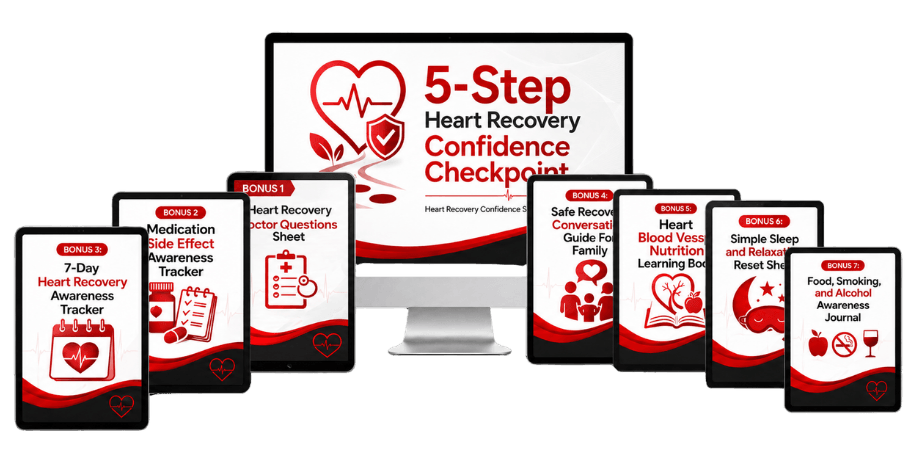
7 Bonuses Included
with Your Order
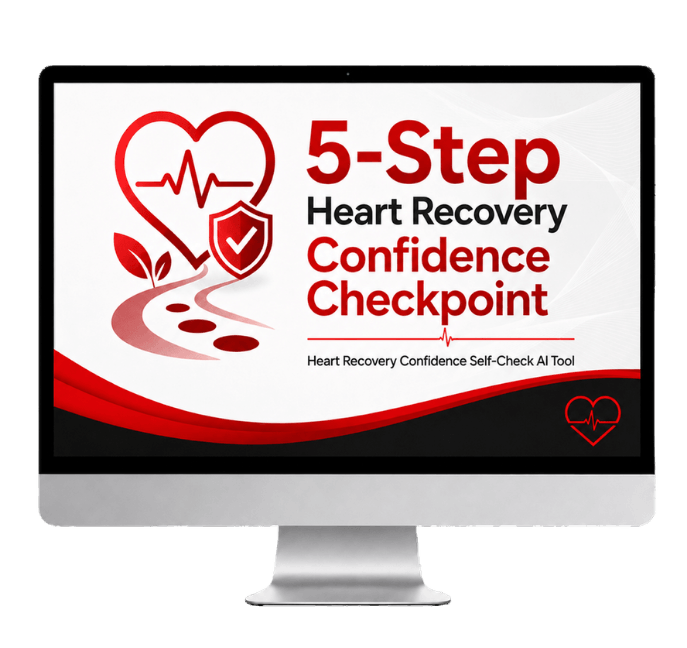
5-Step Heart Recovery Confidence Checkpoint
A simple AI-powered self-check tool that helps you identify your biggest heart recovery confidence blocks in just 5 days, so you can stop keeping every fear in your head and start turning them into clearer next steps.
Bonus 1: Heart Recovery Doctor Questions Sheet
A simple worksheet that helps you prepare better questions for your doctor, especially around medication, symptoms, fatigue, shortness of breath, irregular heartbeat, pain, and other recovery concerns.
Bonus 2: Medication Side Effect Awareness Tracker
A printable tracker to help you write down what you notice after taking medication, so you can bring clearer notes to your doctor instead of guessing or worrying alone.
Bonus 3: 7-Day Heart Recovery Awareness Tracker
A 7-day tracker to help you monitor your blood pressure, energy, sleep, shortness of breath, fatigue, mood, food choices, movement, and medication routine.
Bonus 4: Safe Recovery Conversation Guide For Family
A simple guide to help you explain your recovery needs to your family without feeling judged, controlled, or treated like you are fragile.
Bonus 5: Heart & Blood Vessel Nutrition Learning Book
A beginner-friendly learning book that helps you understand simple heart and blood vessel nutrition basics, including food choices, sodium awareness, hydration, and daily eating patterns to discuss with your doctor.
Bonus 6: Simple Sleep and Relaxation Reset Sheet
A calming bedtime reset sheet to help you create a simple night routine, relax your body, and support better sleep during recovery.
Bonus 7: Food, Smoking, and Alcohol Awareness Journal
A no-shame awareness journal that helps you understand your food, smoking, and alcohol patterns, so you can slowly notice what triggers certain habits and make better choices step by step.
How The 5-Step Heart Recovery Confidence
Checkpoint Works


This is not about trying to fix your whole life in 5 days.
It is about helping you slow down, organize what is happening, and feel clearer about your next recovery step.
Instead of keeping everything in your head…
your fears, symptoms, medication concerns, food choices, doctor questions, and family pressure…
you will move through a simple Heart Recovery Confidence 5-Step System designed to help you feel calmer, more prepared, and more in control.
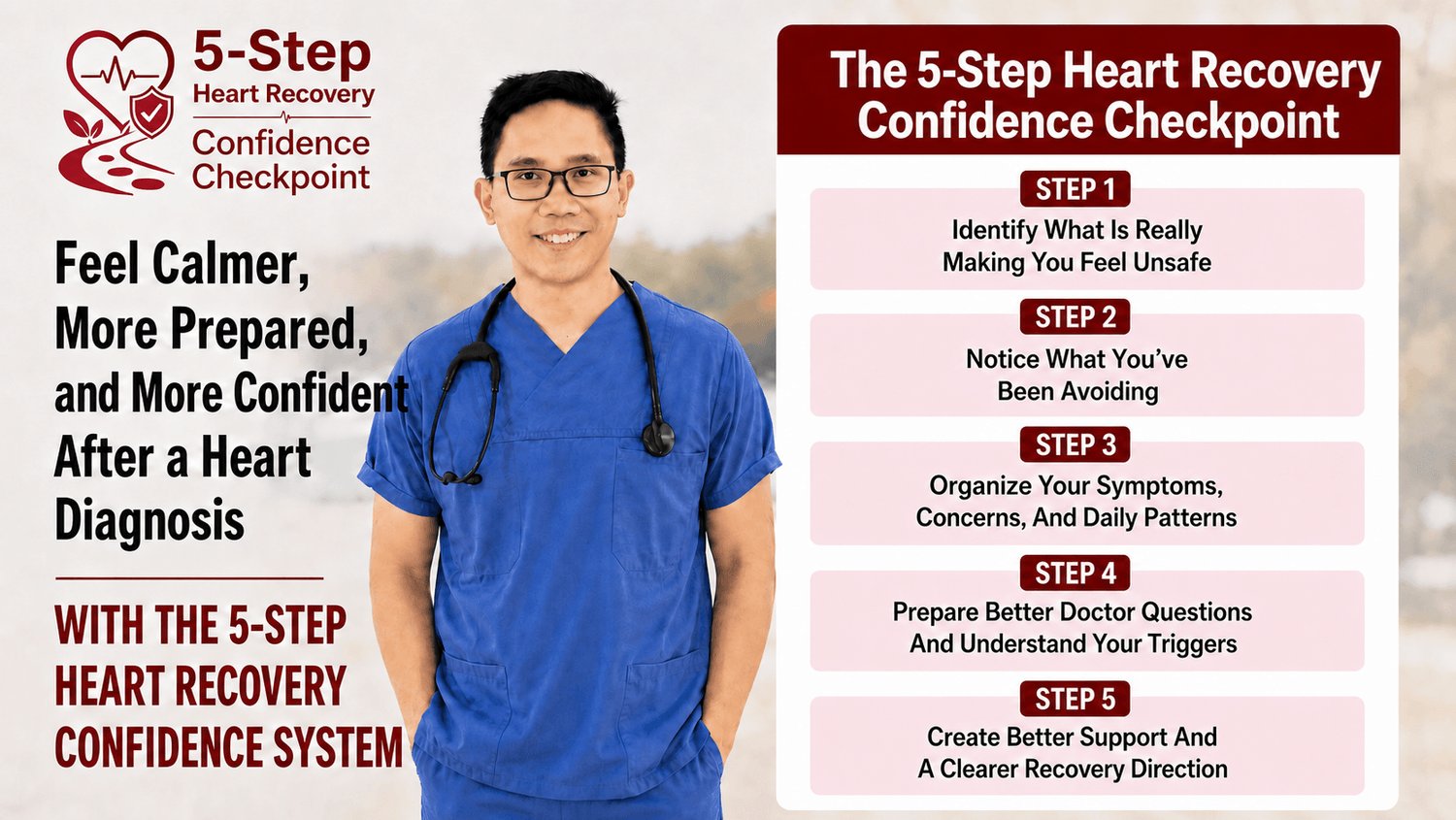
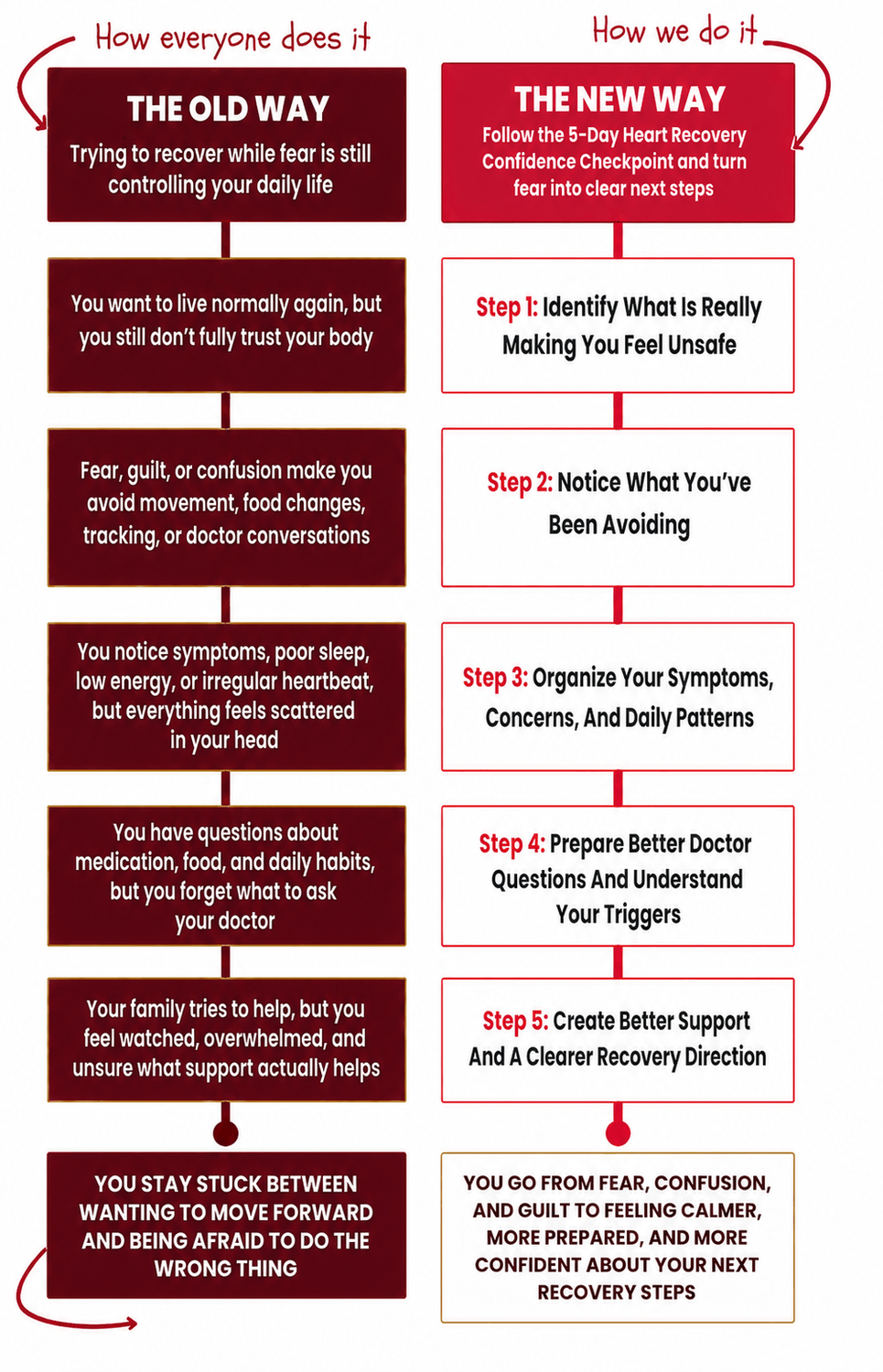
Step 1: Identify What Is Really Making You Feel Unsafe
Start by getting honest about what is making you feel most uncertain right now.
Maybe it is the fear of another heart attack.
Maybe it is shortness of breath, irregular heartbeat, moving too much, returning to work, sleeping poorly, or feeling weak and fragile.
This step helps you bring your biggest fear out of your head, so your recovery no longer feels like one big cloud of worry.
Step 2: Notice What You’ve Been Avoiding
See where fear, guilt, or confusion may be affecting your daily life.
You may be avoiding movement, food changes, tracking habits, doctor conversations, family conversations, or normal activities because you are not sure what is safe.
This step helps you understand what you have been holding back from, so you can start seeing what needs attention first.
Step 3: Organize Your Symptoms, Concerns, And Daily Patterns
Bring your thoughts, symptoms, and concerns into one place instead of trying to remember everything.
You will look at simple patterns such as sleep, energy, breathing, mood, food choices, movement, medication routine, and daily symptoms.
This helps you see what is actually bothering you most, what keeps showing up, and what may be useful to track or discuss with your doctor.
Step 4: Prepare Better Doctor Questions And Understand Your Triggers
Turn vague worries into clearer questions, so you feel more prepared for your next appointment.
You will also look at the things that may be affecting how you feel day to day, including medication concerns, food choices, smoking, alcohol, sodium awareness, hydration, routine habits, and nutrition basics for your heart and blood vessels.
This step does not replace medical advice.
It simply helps you become more aware, more organized, and better prepared to talk to your doctor about what matters.
Step 5: Create Better Support And A Clearer Recovery Direction
Get clearer about what kind of support actually helps you.
This includes how to explain your needs to your family, how to reduce pressure at home, and how to make family concern feel more supportive instead of overwhelming.
By the end, you will have a clearer picture of what you are afraid of, what you are avoiding, what you need to track, what questions to ask, and what small daily actions may help you feel calmer and more in control.
This is why the process works.
It does not ask you to figure everything out alone.
It gives you a simple structure to help you:
understand what is going on
know what to pay attention to
prepare better for doctor conversations
notice the habits and patterns that may affect recovery
and move forward with less fear and more clarity
Not perfectly.
But more calmly.
More clearly.
And with a better sense of what to do next.
A Nurse-Led Checkpoint For The Part Of Recovery People Often Do Not Talk About

The part where you go home and try to remember everything.
The part where your family keeps reminding you to be careful.
The part where you feel something in your body and wonder if it is normal.
The part where you want to ask your doctor something, but do not know how to explain it clearly.
The part where you fall off your routine and feel like you failed again.
That is the part this checkpoint is designed to support.
It gives you simple tools to bring your concerns out of your head and onto paper.
🚨 Your fears.
🚨 Your symptoms.
🚨 Your medication concerns.
🚨 Your food and sleep patterns.
🚨 Your doctor questions.
🚨 Your family support needs.
🚨 Your restart plan.
This is what makes the process feel more doable.
You are not being asked to become a different person overnight.
You are being guided to notice what matters, organize what feels scattered, and prepare for your next step with more calm.
That is why this can be useful even if you already have a doctor.
Because it does not replace medical care.
It helps you show up to your care with clearer notes, better questions, and a better understanding of what has been happening in your daily life.
Most heart recovery conversations focus on instructions.
📌 Take this.
📌 Avoid that.
📌 Eat better.
📌 Move more.
📌 Sleep better.
Follow up with your doctor. And all of that may matter.
But June knows from his nursing experience that
many people struggle with the part that happens after the instruction is given.
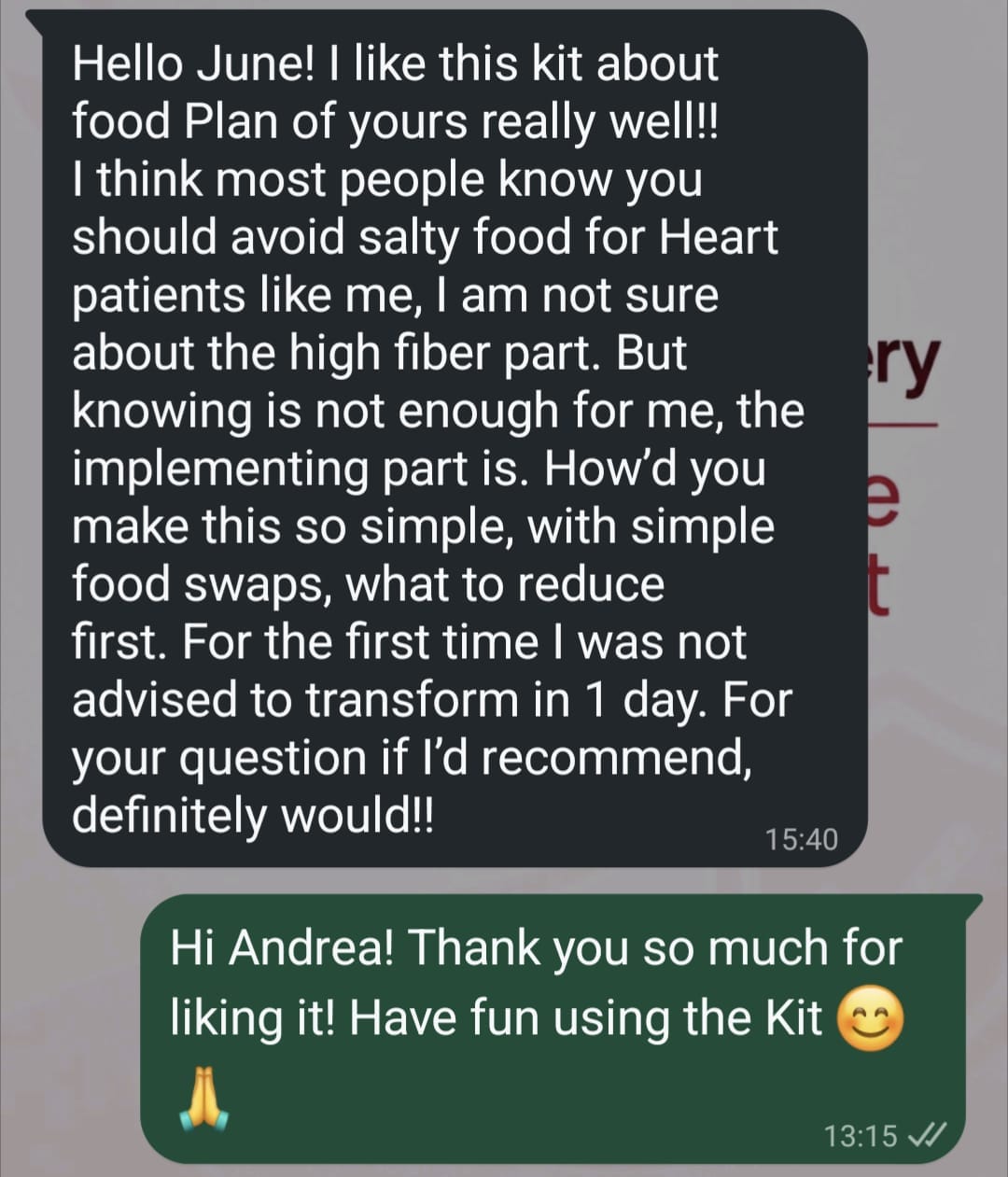
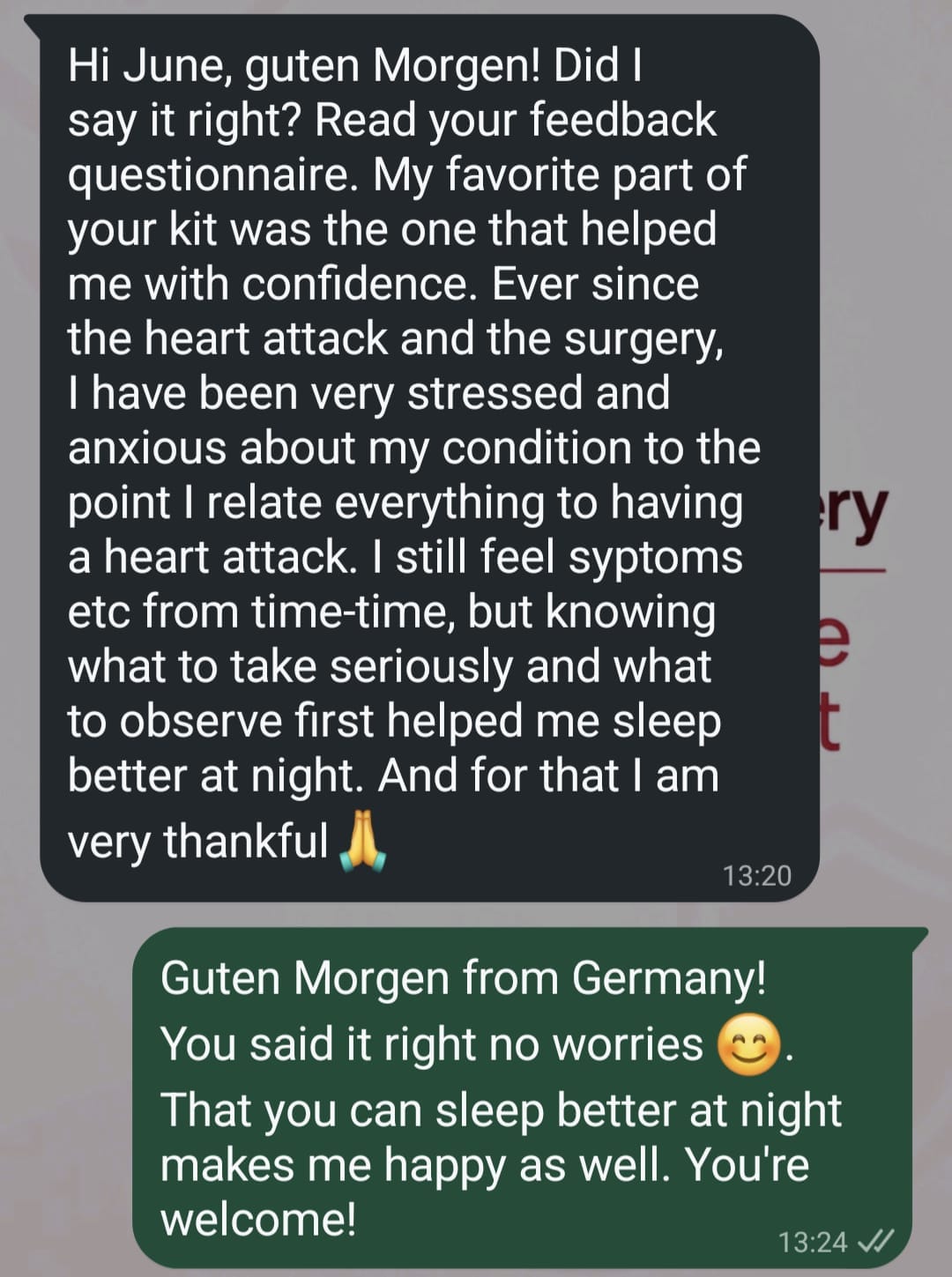
Want to see more?...
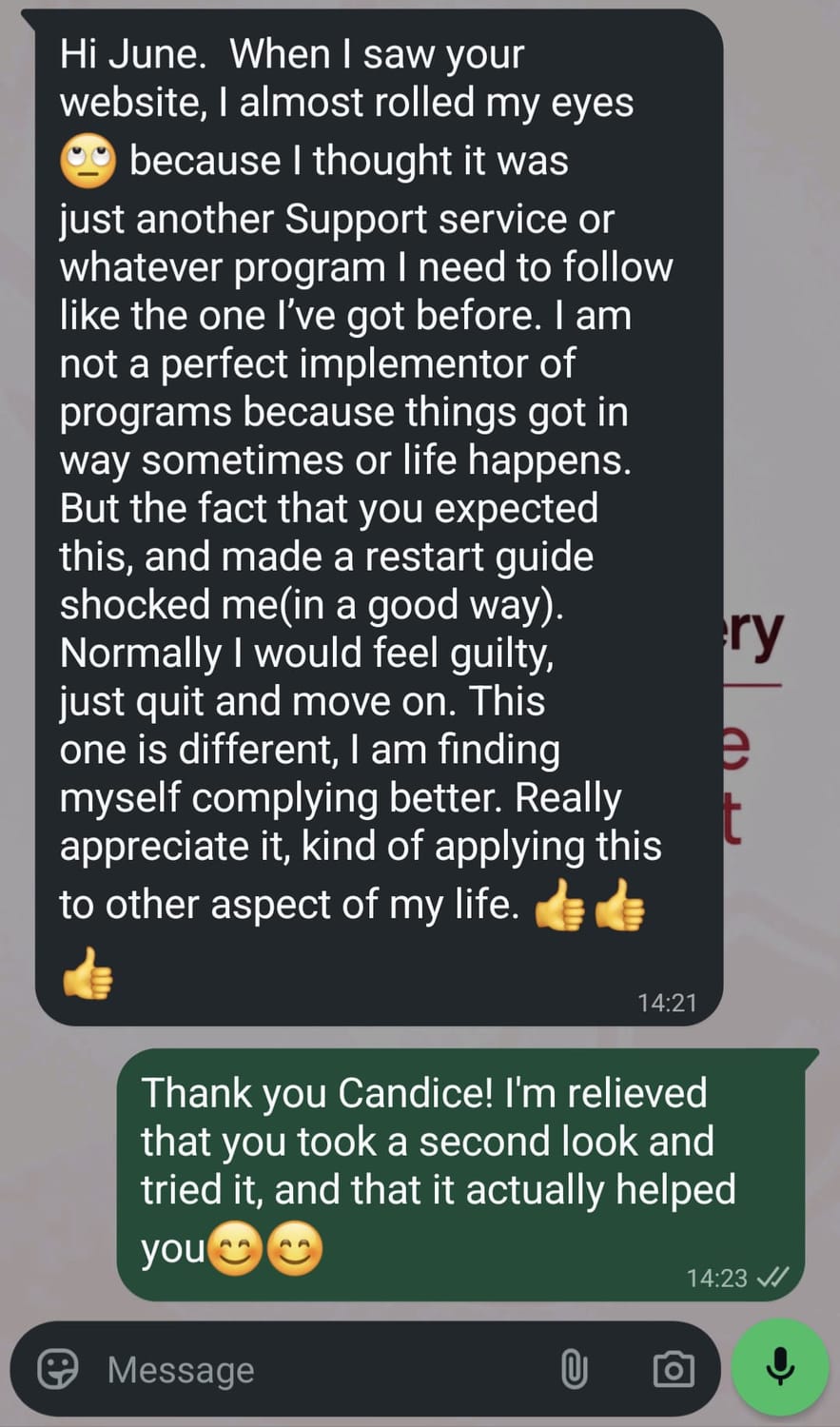
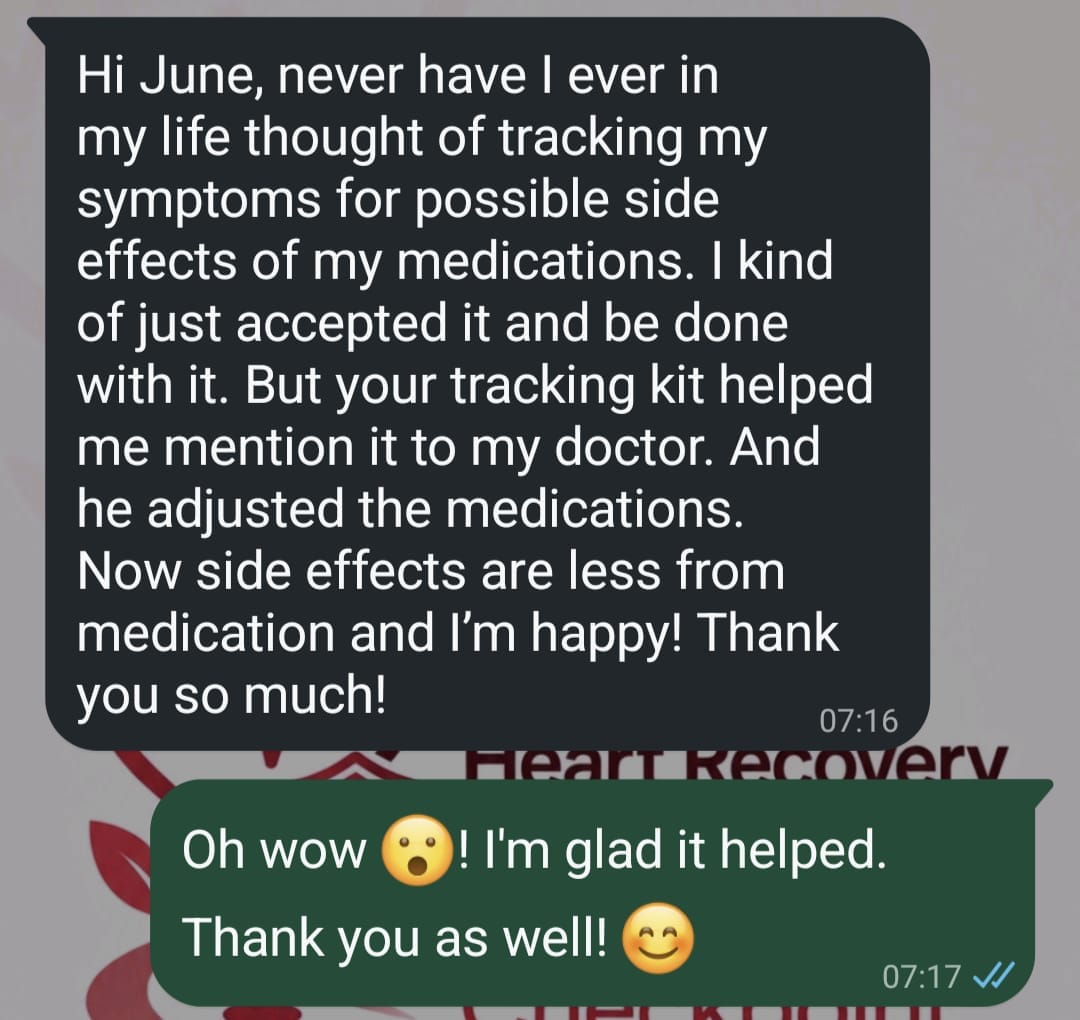
Stop Guessing What To Track, Ask,
And Do Next !
If your recovery has been feeling messy, do not leave everything floating in your head for another week.
💬 Your fears deserve to be organized.
💬 Your doctor questions deserve to be written down.
💬 Your symptoms and habits deserve to be tracked clearly.
And your bad days deserve a restart plan, not more guilt.
The 5-Step Heart Recovery Confidence Checkpoint gives you a simple, nurse led way to begin.
Inside, you will move through the Heart Recovery Confidence 8-Step System, with tools that help you:
📌Name your biggest fear
📌 Notice what you have been avoiding
📌 Organize your symptoms and concerns
📌 Prepare better doctor questions
📌 Track daily recovery patterns
📌 Understand food, medication, and habit triggers
📌 Build a no-guilt restart plan
📌Create better family support
And you are not doing it from memory or guesswork.
You will have the AI self-check, worksheets, trackers, guides, and restart tools to help you take the next step with more clarity.
This is for you if you are tired of thinking:
📢 “What should I ask my doctor?”
📢 “What should I track?”
📢 “What if I fall off again?”
📢 “What if my family keeps treating me like I’m fragile?”
📢 “What if I miss something important?”
You do not need to wait until you feel fully confident.
You can start by getting clearer ‼️
Stop Guessing What To Track,
Ask, And Do Next !
No. The 5-Step Heart Recovery Confidence Checkpoint is not medical advice, diagnosis, treatment, or a replacement for your doctor.
It is a simple awareness and preparation tool to help you organize your fears, track what matters, prepare better doctor questions, and feel clearer about your next step.
Always follow the advice of your doctor or healthcare provider.
This is for people who have experienced a heart diagnosis, heart warning sign, or chronic disease concern and now feel scared, confused, or unsure what to do first.
It may be helpful if you are dealing with things like high blood pressure, high cholesterol, high blood sugar, fatigue, shortness of breath, medication concerns, food confusion, poor sleep, or fear of another health event.
No.
This can also be useful for people who have received heart-related warning signs, such as high blood pressure, high cholesterol, or other concerns that made them realize they need to take their health more seriously.
The focus is not on treating a condition.
The focus is on helping you become more aware, prepared, and organized.
You will get access to the Heart Recovery Confidence Self-Check AI Tool plus practical bonuses, including:
Heart Recovery Doctor Questions Sheet
Medication Side Effect Awareness Tracker
7-Day Heart Recovery Awareness Tracker
Safe Recovery Conversation Guide For Family
No-Guilt Heart Recovery Restart Plan
Simple Sleep and Relaxation Reset Sheet
Food, Smoking, and Alcohol Awareness Journal
These tools help you organize your fears, prepare questions, track daily patterns, and restart without guilt.
The AI tool guides you through simple self-check questions.
It helps you identify what you are afraid of, what you may be avoiding, what you should track, what questions you may want to ask your doctor, and what support you may need from family.
It is not there to diagnose you.
It is there to help you organize your thoughts more clearly.
That is exactly why this can help.
Many people have a doctor, but they still forget what they wanted to ask, struggle to explain what they are feeling, or walk into appointments with scattered concerns.
This tool helps you prepare clearer questions and notes, so your next doctor conversation can feel more organized.
This was created with that in mind.
June’s audience often struggles with compliance, so this is not built around perfection.
You also get the No-Guilt Heart Recovery Restart Plan, which helps you know what to do after a bad food day, missed tracking, poor sleep, or falling off your routine.
The goal is not to be perfect.
The goal is to know how to restart.
This does not promise to fix, cure, or reverse any heart condition.
It helps you with awareness, tracking, preparation, and confidence.
You should continue working with your doctor for medical care, treatment, medication, and health decisions.
The main checkpoint is designed to be completed over 5 days.
Each day focuses on one simple area, such as identifying your fear, noticing what you are avoiding, preparing doctor questions, tracking patterns, and creating a restart plan.
You do not need to spend hours per day.
The goal is to make the process simple enough to follow even if you are busy or tired.
Yes.
This is made for people who feel overwhelmed, not people who already have everything figured out.
Instead of giving you more random information, it gives you a simple structure to organize what is already on your mind.
That is one of the things this offer helps with.
The Safe Recovery Conversation Guide For Family helps you explain what kind of support actually helps you, without making you feel judged, controlled, or weak.
The goal is to help your family support you better while still allowing you to feel like yourself.
No.
Food and daily habits are part of it, but this is not just a diet or exercise guide.
It also helps with fear, doctor questions, medication concerns, symptom tracking, sleep, family support, and restarting after you fall off.
It is more about recovery confidence and daily awareness than a strict health plan.
No.
The tool and bonuses are designed to be simple and practical.
You do not need to understand complicated medical language.
You only need to answer simple questions, write down what you notice, and use the worksheets to prepare better for your next step.
Searching online can give you more information, but it can also make you more confused.
This checkpoint gives you a clearer structure.
Instead of jumping from one article or video to another, you will organize your fears, symptoms, habits, doctor questions, and support needs in one place.
After you get access, start with the Heart Recovery Confidence Self-Check AI Tool.
It will help you begin the 5-step checkpoint and guide you through the first step, identifying your biggest fear and what has been making recovery feel unclear.
You do not need to fix everything in 5 days.
You just need to slow down, organize what is going on, and understand what to look at next.
That is the first step toward feeling calmer, clearer, and more prepared.
5-Step Heart Recovery Confidence Checkpoint © 2026 All rights reserved.